Three-way floorstander with Harmonious Diaphragm™ and resonance control
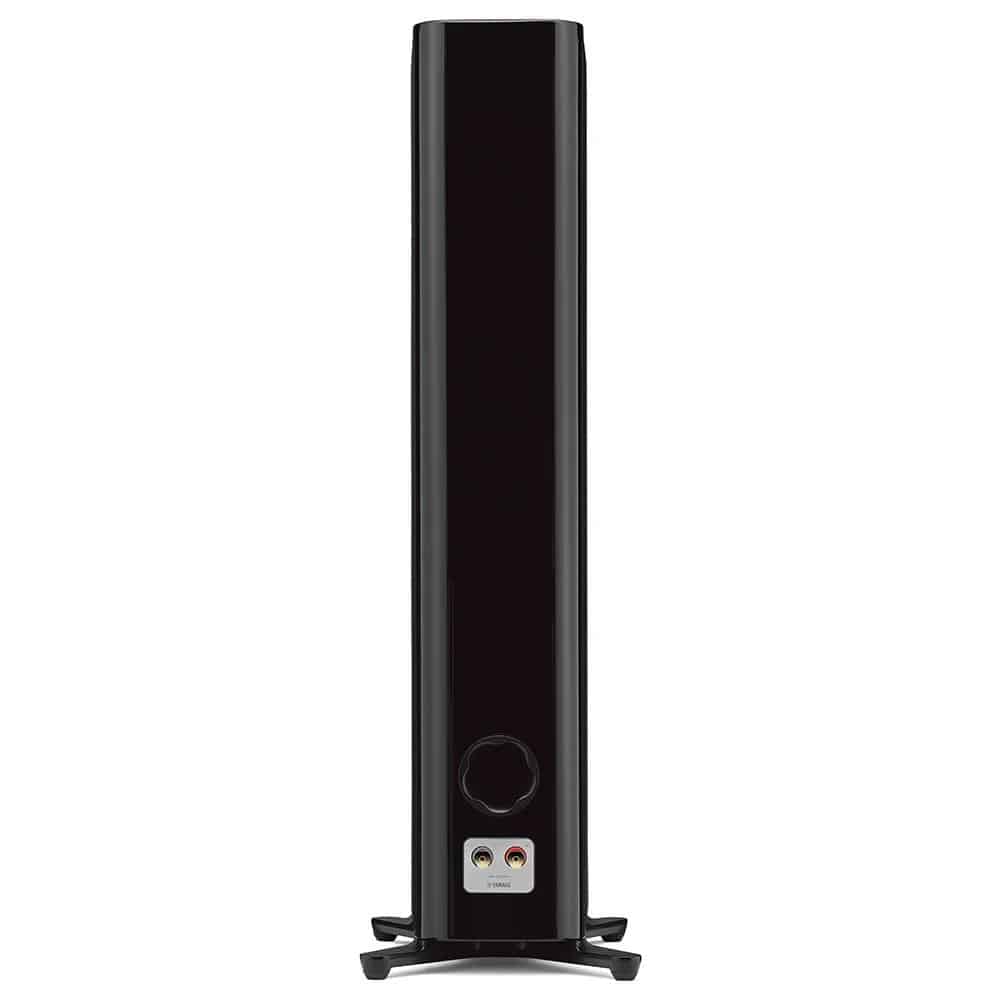
NS-2000A is a Yamaha three-way floorstanding speaker using Harmonious Diaphragm™ in ZYLON™ and spruce, R.S. chambers, an acoustic absorber and Mundorf crossover components.
The construction transfers technologies developed for Yamaha reference models into the floorstanding range. Tweeter, midrange and woofer work to maintain a uniform tonal character, while cabinet, damping and bracing are developed through vibration analysis to preserve dynamics and imaging without relying on excessive amounts of sound-absorbing material.
Key features
- Three-way floorstanding configuration with four feet.
- Harmonious Diaphragm™ in PBO ZYLON™ fibre and spruce.
- R.S. (Resonance Suppression) chambers on tweeter and midrange.
- Yamaha acoustic absorber to control standing waves.
- Cabinet studied using laser vibrometry and FEM analysis.
- Crossover with Mundorf audio capacitors.
- Pure brass speaker terminals.
- Gloss finish produced using a process inspired by Yamaha pianos.
Harmonious Diaphragm™
The blend of PBO ZYLON™ and spruce is used to achieve high propagation speed together with greater internal damping. Spruce draws on Yamaha's experience with piano soundboards, while ZYLON™ provides lightness and rigidity; the aim is to make the tonal character of the different drivers more uniform.
R.S. chambers
The R.S. structures are mounted behind the tweeter and midrange and use two specially shaped ducts to cancel resonances generated on the rear side of the diaphragms. The system works without filling the chambers with absorbent material, helping preserve the finer information in voices and instruments.
Acoustic absorber
The cabinet uses a dedicated Yamaha absorber to control internal standing waves while reducing the use of conventional sound-absorbing material. This approach aims to remove cabinet colouration without excessively attenuating acoustic energy, preserving more of the contrast between delicate passages and transients.
Cabinet and vibration analysis
The construction is studied using tools also employed in musical-instrument research, including laser vibrometers and FEM analysis. Bracing is positioned according to the actual behaviour of the surfaces, allowing the enclosure to control so-called box ringing without simply becoming a structure stiffened indiscriminately at every point.
Crossover and terminals
The frequency-dividing circuit uses selected components, including Mundorf audio capacitors, to reduce losses between input and drive units. Terminals machined from pure brass provide stable contact and secure tightening, completing the electrical path with a connection designed for long-term Hi-Fi use.
Piano finish
The gloss surface uses a process linked to Yamaha grand-piano finishing and turns the large cabinet into an element visually suited to carefully designed domestic interiors. The finish also contributes to surface rigidity, complementing the internal solutions dedicated to mechanical control of the enclosure.