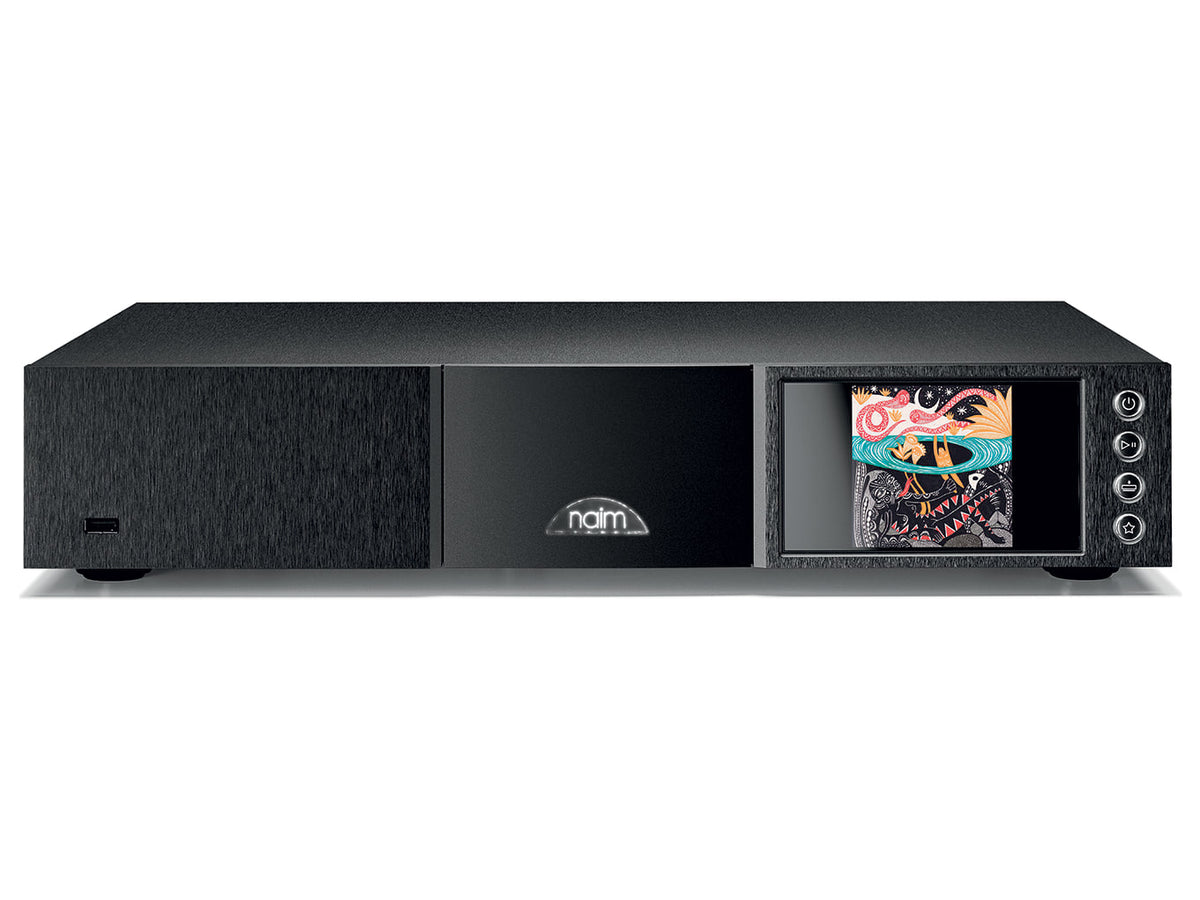
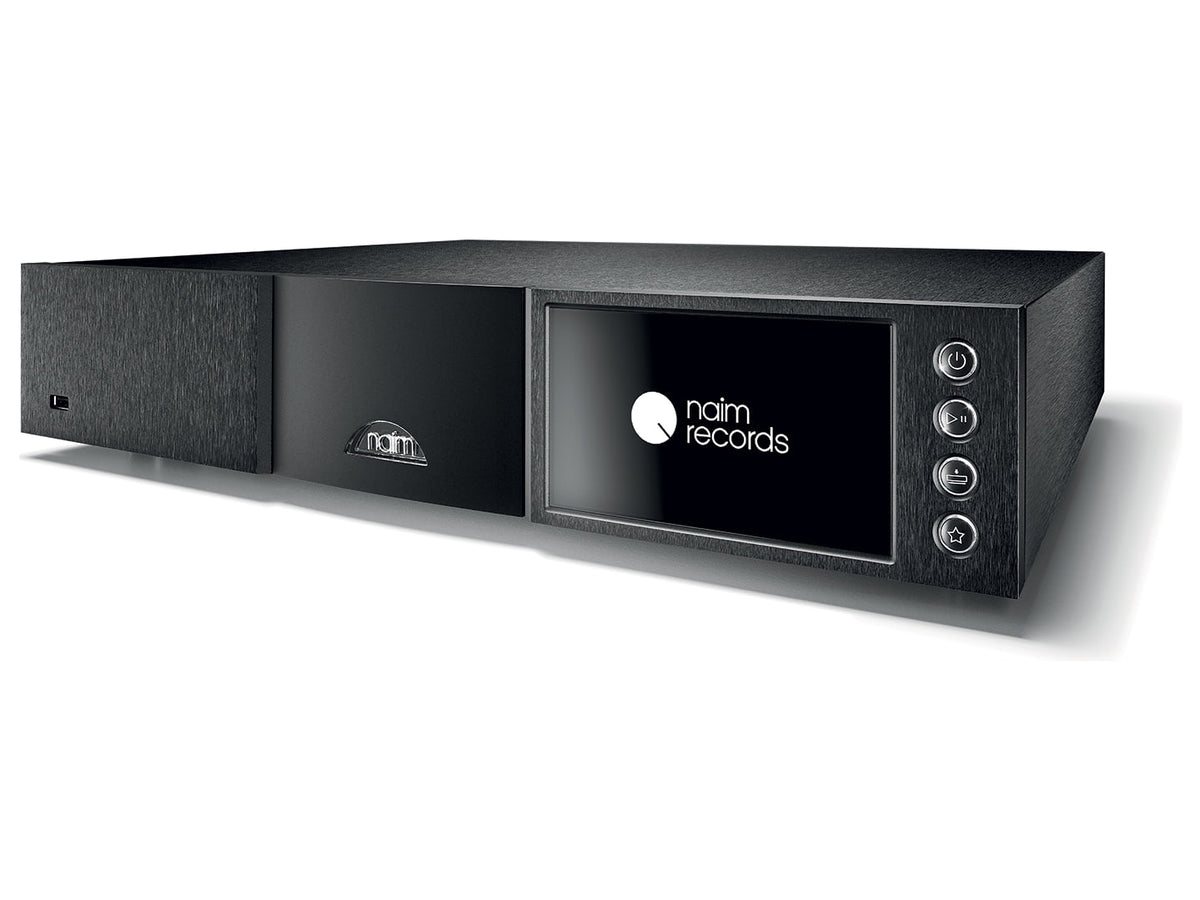
The 500 Series network player that requires 555 PS DR power to operate
Naim ND 555 combines streaming up to 384 kHz, a Burr-Brown R2R DAC, suspended sub-chassis and mandatory external NAPS 555 DR power.
The single Naim ND 555 is a 500 Series digital source without a self-contained operating power supply: it must be connected to at least one 555 PS DR. Unlike NSS 333, which can run from its internal supply and also offers XLR outputs, ND 555 uses a more separated architecture with external power, RCA and DIN outputs and mechanical suspension for sensitive audio circuitry.
Key features
- WAV up to 32-bit/384 kHz, FLAC, AIFF and ALAC up to 24-bit/384 kHz, plus DSD64/128
- Apple AirPlay 2, Bluetooth, Chromecast, Qobuz, Roon Ready, Spotify Connect, TIDAL and UPnP
- Burr-Brown PCM1704K R2R DAC architecture
- SHARC DSP with oversampling and 40-bit internal precision
- Two optical inputs, RCA coaxial and BNC coaxial inputs
- Analogue outputs on stereo RCA and 5-pin DIN
- 10/100 Ethernet and 802.11a/b/g/n/ac Wi-Fi
- Suspended brass sub-chassis for sensitive analogue sections
- Compatible with Super Lumina and NAPS 555 DR power supply
555 PS DR is not an optional upgrade
For ND 555, external power is a required part of the system rather than a later accessory as it is with some other Naim streamers. The minimum configuration uses one NAPS 555 DR; Naim's compatibility guidance also allows a second 555 PS DR to further separate the player's power feeds.
How it differs from NSS 333
NSS 333 belongs to New Classic 300, contains its own power supply, can be upgraded with NPX 300 and adds balanced XLR outputs. ND 555 remains tied to the 500 Series approach: mandatory external power, PCM1704K conversion, mechanically suspended audio circuitry and DIN/RCA analogue connection.
The source for NAC 552 and Statement
ND 555 can feed NAC 552 through DIN or RCA and can also sit ahead of Statement NAC S1 using the connection best suited to the system. The Focal and Naim App manages network libraries, streaming services, multiroom and updates, while the remote provides direct control without a mobile device. The absence of volume control confirms its source-only role, leaving level adjustment entirely to the connected preamplifier.