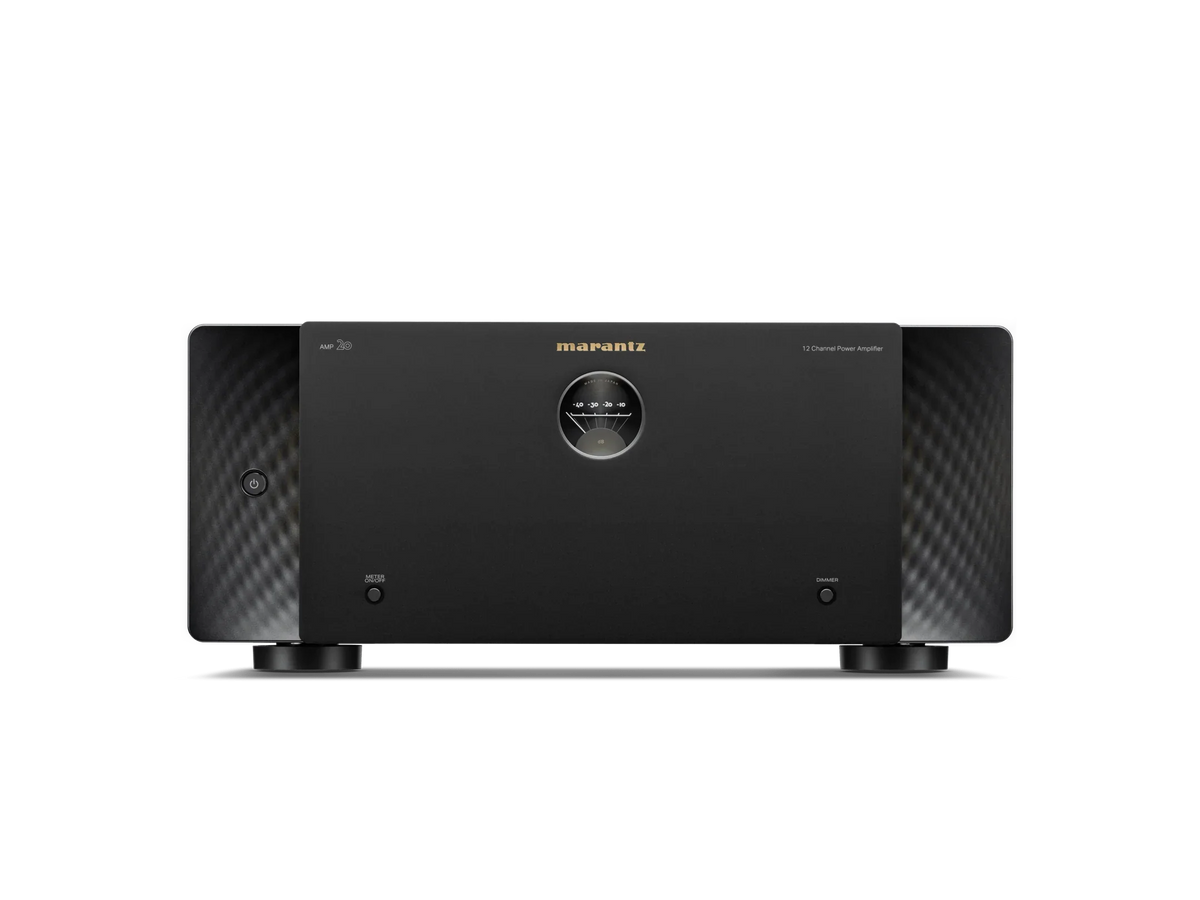
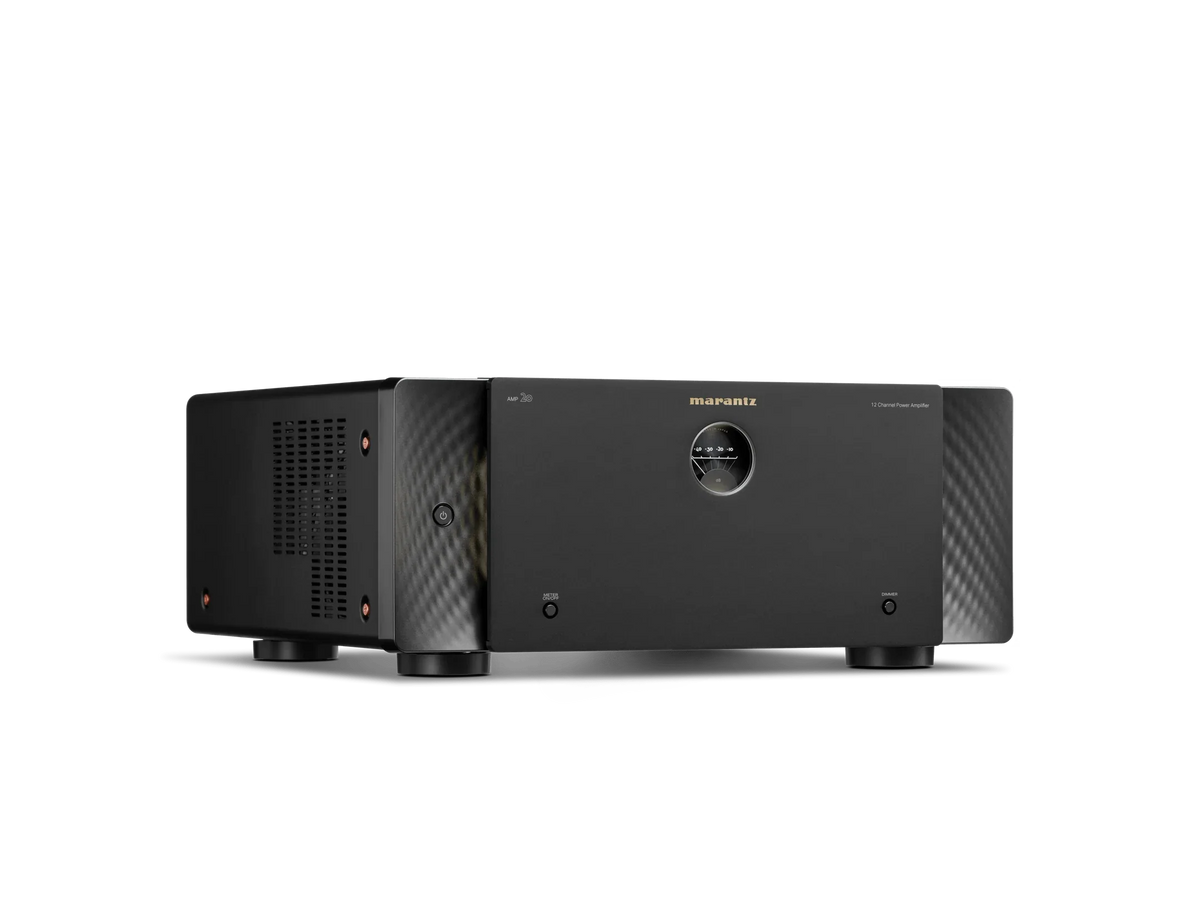
AMP 20: 12 power channels with one clear purpose
A 200-watt-per-channel amplifier with HDAM modules and configurable switching stages for a 7.4.4 or 9.2.2 system without multiplying chassis.
AMP 20 neither selects sources nor decodes formats. It receives signals from AV 20 and supplies current to the loudspeakers. Its 12 channels at 200 watts define the size of system it can support in one enclosure.
Key features
- 12 channels at 200 watts
- custom-developed switching amplification
- HDAM modules
- selectable RCA and XLR inputs
- normal, bi-amp and BTL modes
- linked control with AV 20
Twelve channels as a working scale
AMP 20 covers many 7.4.4 and 9.2.2 layouts by itself, reducing chassis count without buying four stages destined to remain idle. Uniform amplification simplifies matching between surrounds and overheads, while a separate stereo power amplifier can serve particularly ambitious front speakers.
AV 20 defines the map
With AV 20, twelve XLR connections can follow a straightforward assignment and the thirteenth channel can use a dedicated amplifier. That small asymmetry is useful: centre or main pair may receive a different power stage rather than forcing one solution onto every loudspeaker.
Bi-amp and BTL alter the design
Selectable modes can assign two stages to one loudspeaker or bridge them for greater output. They are not casual sound settings: each choice reduces the available channel count and requires a suitable electrical load. Their value lies in demanding front speakers or a planned upgrade path.
Special modes without wasting the chassis
Bi-amp and BTL operation make sense when fewer than twelve speakers leave spare stages. In an already complete array, enabling them would displace channels. AMP 20 therefore rewards an exact output schedule with declared priorities between quantity, output and front-speaker drive.
Choosing the right scale
AMP 20 concentrates twelve channels, a practical count for many real immersive rooms. AMP 10 rises to sixteen for extreme layouts; AMP 30 falls to six and excels as an expansion amplifier. With AV 20, one chassis covers twelve of thirteen processed channels and leaves room for a dedicated front-channel amplifier. Twelve channels enable a tidy one-chassis solution while the front pair may use a dedicated stereo amplifier. That division is more useful than buying sixteen outputs which the room design has no intention of connecting. It also leaves the signal map easier to maintain.