
Final Audio's latest research and development achievements have resulted in a new series of cutting-edge products.
In this B series, the model names (and prices) are not tied to the usual numerical hierarchy, but rather reflect the order in which the products were developed, a completely new system of cataloguing products.
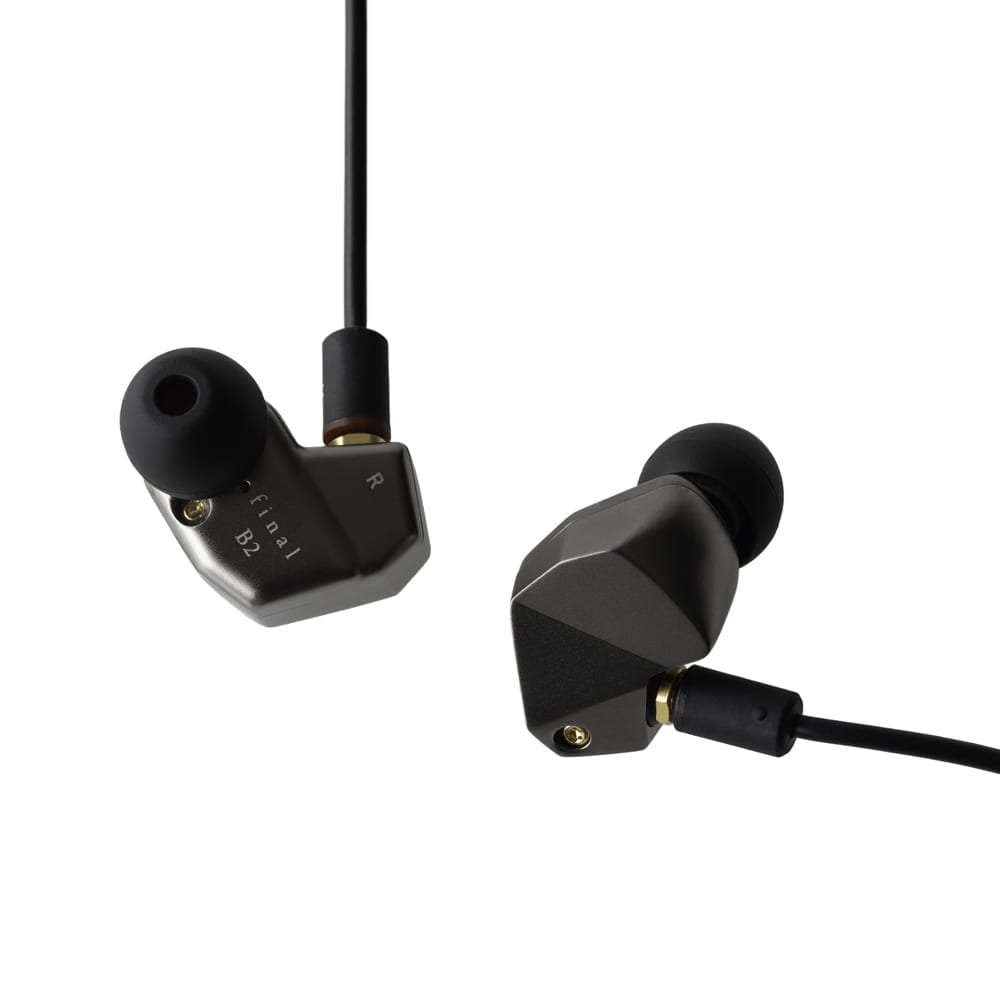
In-Ear Headphones – Final Audio B2
- Housing: Stainless steel (gunmetal finish)
- Speaker Type: 1BA
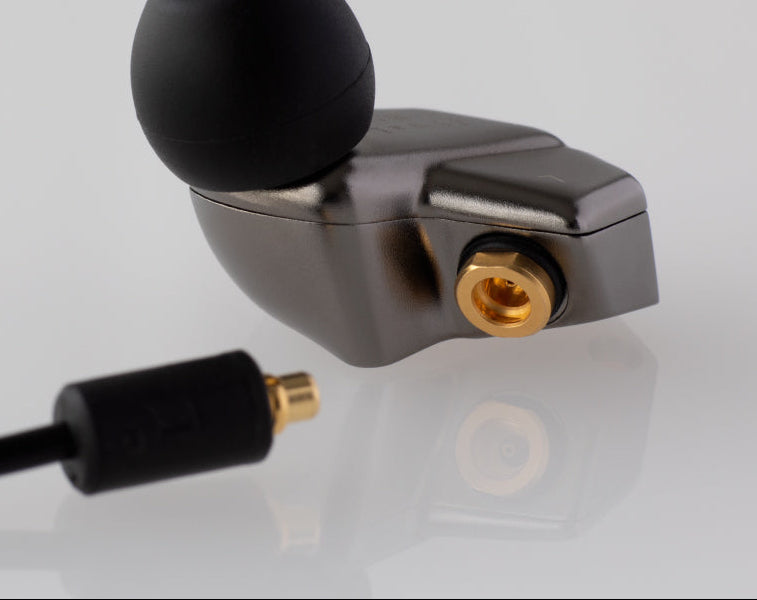
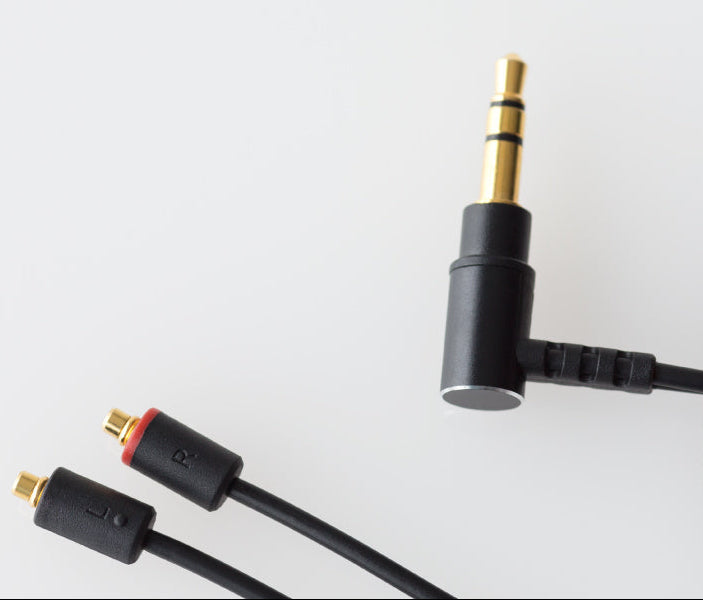
- Connector: MMCX
- Cable: Black OFC
- Sensitivity: 109dB
- Impedance: 41Ω
- Weight: 32g
- Cable length: 1.2m
- Sound characteristics: The voices are reproduced so naturally that the performers' breathing is perceptible, as are the subtle nuances and timbre of each musical instrument.
B2
The B2s were designed with the delicate relationship between spatiality and dynamic range in mind, while respecting the physical characteristics of the headphones.
The voices are reproduced so naturally that the performers' breathing is perceptible, as are the subtle nuances and timbre of each musical instrument.
Through research into the relationship between the spatiality, clarity, and dynamic range of music recordings and the physical characteristics of earphones and headphones, Final learned that the deepest enjoyment of music can only be achieved by optimizing the frequency response. This goal was achieved by optimizing a driver that best adapts to the sound of music recordings.
The B2 is a particularly suitable model for music with a lot of spatial information. It is well suited, for example, to classical music recordings that exploit the reflections and reverberations of a concert hall, as well as for live events, giving the sensation of "being there." Furthermore, the B2s use an MMCX connector, which allows for cable replacement in the event of a fault.

Characteristics
The sound of these headphones was achieved by taking into account the relationship between the spatial impression and the dynamic range of the music, creating an excellent sound.
The approach was based on spatial perception. Classical and jazz recordings place great emphasis on spatiality, distance, amplitude, and reverberation. Rock, pop, and many recent soundtrack recordings don't take this aspect into account. The emphasis is on clarity of reproduction, which brings the various instruments and vocals to the fore.
Another approach is dynamic range, or changes in volume over time. If the dynamic range is wide, you can use the variation in volume over time to achieve a more dynamic expression of the music. However, there are some types of music for which recordings with a more limited dynamic range are preferable, to allow each instrument and the vocal to appear more clearly to the listener.
The difference between these two approaches isn't about which is better, but rather the differences in how the music is composed and what is required of the musician. For classical music in general, and orchestral music in particular, the spatial orientation of the instruments is particularly important. String instruments are positioned closer to the audience, with the percussion instruments behind them. If the balance between spatial orientation and volume of each group of instruments is not accurate, the music would lose its meaning. For this reason, it's not appropriate for each instrument to appear before the listener's eyes. For rock and pop, however, spatiality isn't as essential, and so there's more emphasis on clarity than spatiality.
These prerequisites are very important, especially for listening with headphones and earphones, and it is increasingly clear how necessary it is during the design phase to set objectives on which aspect to prioritize, in order to use the best speaker and the most suitable structure to achieve the design goal.
Let's look at the graph below, where spatiality and clarity of the music are represented on the X-axis and dynamic range on the Y-axis. While the E3000 model was designed with the aim of reaching the center of the graph, the B-series is positioned outside of that area.
In other words, unlike the E Series, the B Series was created to listen to a specific type of music, and you might be so captivated by it that you can't live without it. This is a typical feature of Final products.

Technical specifications